
All About The Truffle

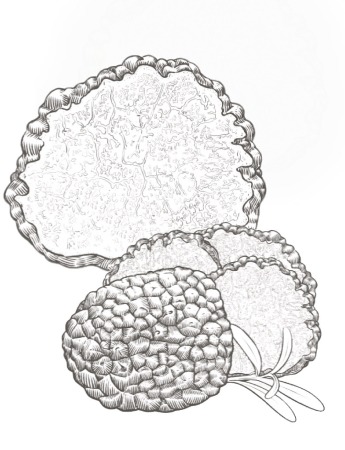
Truffles are a type of fungus that grows underground at or near the base of trees known as host trees, but not every tree is suitable for truffle growth. Poplar, beech, and oak trees are typical hosts. Truffles typically develop alongside the roots of broadleaf trees, occupying a 120 to 150 centimeter-diameter region beneath the tree. 5 to 40 centimeters underground, the primary body of the truffle is concealed. As mycorrhizal fungi, truffles are typically located near the tree roots. Animals that consume the fungus spread truffle spores. Numerous types of truffle fungi are found throughout the globe. They were distinguished by color, shape, fit, and size. Truffles do not resemble the common crowned mushrooms known as boletus fungi. In actuality, they resemble peculiar little potatoes at first glance. Don’t be fooled by their appearance; these natural marvels are bursting with flavor! Along with caviar and foie gras, truffles are considered the “Three Western Delicacies.” They are considered premium ingredients in Western cuisine, particularly the white truffles (Tuber magnatum Pico) from Italy and black truffles (Tuber melanosporum Vitt.) from France, which are among the most esteemed. Genuine truffles are exceedingly scarce, but once you’ve tasted one, you’ll never forget the experience. From their distinctive flavor to their seasonality, they provide a genuinely singular culinary experience.
Diamonds of The Kitchen
The renowned French gastronome Brillat-Savarin referred to truffles as the “diamonds of the kitchen” in his 1825 work “The Physiology of Taste” (Physiologie du Goût).
History

The history of truffles dates back to ancient times. Civilizations such as the Sumerians, Egyptians, Greeks, and Romans valued them. The Greeks and Romans believed that truffles possessed aphrodisiac properties and utilized them frequently in their cuisine and medicine. During the Middle Ages, truffles fell out of favor in Europe due to their association with pagan rituals. In Italy and France, truffles enjoyed a renaissance in prominence during the Renaissance. They became highly desired by nobles and royals. During the 18th and 19th centuries, truffles continued to be celebrated in Europe, and their culinary significance increased. French cuisine, in particular, embraced truffles, and they became a symbol of gastronomic excellence. Due to deforestation and urbanization, truffles grew scarcer in the 20th century. To meet demand, truffle cultivation (trufficulture) was devised, resulting in the cultivation of truffles in orchards under controlled conditions. This aided to increase truffle accessibility. Truffles continue to be a highly coveted and expensive ingredient in haute cuisine. They are harvested in various regions around the globe, with the white truffle from Italy and the black truffle from France being the most well-known varieties. Truffles are both a delicacy and a symbol of luxury and sophistication.
How do people find truffle?
Though truffle can be found worldwide, they most frequently found in France and Italy. The alba or white truffle is the most prevalent variety of truffle. These scrumptious mushrooms are grown in Spain, France, and Italy. They can be as expensive as $2300 per pound!
Truffles are subterranean fungi found in forests. They are shaped like small, asymmetrical balls and are discovered by digging, particularly near tree roots. They scent and taste distinctively earthy. Dogs, pigs, pigeons, rats, badgers, moles, horses, rabbits, and raccoons, among others, can find truffles in the open. In fact, you can purchase truffle-hunting kits for canines on the Internet. Once ripe, humans harvest a truffle by unearthing the plant, removing portions of the root system at various depths for consumption, and replanting the remaining portions elsewhere so they can continue to grow.
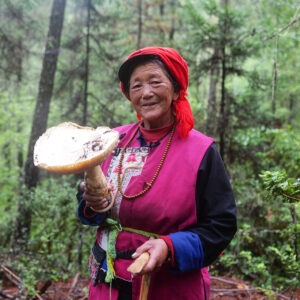
At HNG, the truffles are predominantly procured from unspoiled natural habitats in Gaoligong area, with a focus on maintaining their extraordinary quality and flavor for the satisfaction of discerning gastronomes.
Truffle from around the world
There are a variety of methods to acquire these truffles, including truffle farms and truffle hunting.
Today, truffle products are sourced from both wild and farmed truffles found in countless locations around the world, such as New Zealand, the Pacific Northwest of North America, New York, Australia, the Tuscany, Alba, and Piedmont regions of Italy, the Périgord region of France, and Gaoligong in China.
The skin of Italian black truffles exhibits a distinct texture and shape, characterized by a gritty surface and a deep chestnut hue. In contrast, black truffles sourced from the Gaoligong Mountains in Yunnan province display a skin reminiscent of lychee fruits, while its flesh possesses a deep black coloration.
The harvest season of truffles depends on the type of truffle and the region where they are found. Winter truffles are typically harvested from November to March in the Northern Hemisphere. The peak season is often around December and January. They are commonly found in regions of France, Italy, and Spain. Black summer truffles have a harvest season from May to August in the similar regions as black winter truffles. White truffles are harvested from September to December. The peak season is often in October and November. The most famous white truffles come from the Piedmont region of Italy. In France and other European regions, truffles are typically harvested from September to December. In the United States, Oregon truffles are usually harvested from late autumn to early spring, with the peak season in December and January. Truffles in the Gaoligong Mountains region of Yunnan undergo ripening in the month of October, initiating a truffle harvesting season that spans from September through January of the next year.
Truffles are normally relished in their fresh state, but people frequently preserve them using freeze-drying or oil infusion techniques to increase their shelf life. Truffles are now processed into a variety of goods, including truffle oil, truffle salt, truffle sauce, truffle seasonings, and more.
Truffles have a remarkable nutrient profile and are rich in numerous essential vitamins and minerals. In fact, they are rich in carbohydrates, protein, fiber, saturated and unsaturated fatty acids, vitamin C, phosphorus, sodium, calcium, magnesium, manganese, and iron.
Truffles may be a comprehensive source of protein because they contain all nine essential amino acids.
Truffles are an excellent source of antioxidants, which help combat free radicals and prevent cellular oxidative damage. In addition to their exceptional nutritional profile, truffles may also possess antimicrobial properties that inhibit the proliferation of certain bacterial strains.
Some people equate the flavor of truffles to the forest floor after a refreshing summer rain, when everything is green and fresh. Others assert that truffles have a savory, meaty flavor with traces of nuttiness or brininess, comparable to that of an exceptional green olive. Depending on which variant you select, the taste of the truffles can vary. White truffles, Black truffles, Summer truffles, Burgundy truffles, Périgord truffles, French black, Black summer truffles, and Gaoligong truffles are among the many varieties.
truffles are best enjoyed sparingly because of their intense flavor. A little goes a long way, and their unique aroma should complement and elevate the overall dish.
One of the most classic and beloved ways to enjoy truffles is by shaving them thinly over hot, freshly cooked pasta. Truffle also used in truffles risotto, truffle butter, scrambled or fried eggs by grating truffles on top just before serving and truffle popcorn.
 English
  Chinese