
All About The Matsutake

Matsutake mushrooms, scientifically known as Tricholoma matsutake, are esteemed edible fungi native to various regions in the Northern Hemisphere, such as Asia, North America, and Europe. Due to their scarcity, distinctive flavor, and cultural significance, it is one of the most expensive mushrooms in the world. These mushrooms are revered for their distinct flavor, potent aroma, and unique cultural significance in a variety of culinary traditions.
Matsutake mushrooms have a tall, slender stem and a cap that ranges in color from light to dark brown. The cap is clothed with white to cream-colored characteristic scales. Underneath the cap, the gills are white. Matsutake mushrooms are renowned for their earthy, nutty, and spicy flavor, which is typically characterized as a blend of cinnamon, pine, and earthy notes. However, depending on the region and growing conditions, the flavor can vary marginally. This aroma is the distinguishing factor between Matsutake and other mushrooms.
Matsutake mushrooms are mycorrhizal fungi, which create symbiotic associations with specific tree species. They are most commonly found in coniferous and broadleaf forests, frequently alongside pine, spruce, or fir trees. Their habitat and specific tree associations can differ depending on where they live. Matsutake mushrooms are most commonly found in the fall and early winter. Because they have a relatively limited harvesting season, they are a popular ingredient during this time.
In Asian cuisine, particularly in Japan, matsutake mushrooms are considered a delicacy. They are used in stews, rice dishes, stir-fries, and hot pots, among other dishes. Matsutake rice (matsutake gohan) is a popular and fragrant rice dish in Japan.
The King of The Undergrowth
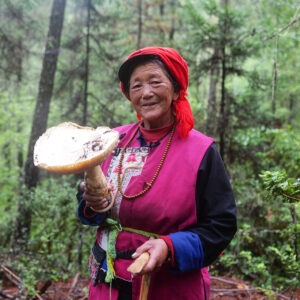
Matsutake mushrooms are hand-picked in autumn, from late summer to early winter. The timing depends on the place and climate. The matsutake season in Shangri_La typically runs from August to early October. These mushrooms are valued for their freshness and flavor, making them ideal for cooking and seasonal celebrations.
History

Matsutake, also known as the “pine mushroom,” is a rare and highly coveted delicacy in the culinary world. Its delicate yet captivating fragrance, which has been described as spicy, piney, and even cinnamon-like, makes it a prized ingredient for haute cuisine. Some people refer to wild matsutake mushrooms as “white gold” because they are extremely uncommon and command exorbitant prices, ranging from $1,000 to $2,000 per pound. The matsutake mushrooms exhibit a wide range of diversity in several regions in Asia, including Japan, China, and Korea. Additionally, these mushrooms may also be found in certain parts of Europe, specifically Sweden and Finland. Furthermore, matsutake mushrooms are known to grow abundantly in several regions across North America, such as Canada, Oregon, California, Washington, and Colorado. At HNG, the Matsutake mushrooms are predominantly procured from unspoiled natural habitats in Shangri_La, with a focus on maintaining their extraordinary quality and flavor for the satisfaction of discerning gastronomes.
While Matsutake mushrooms are highly popular in Japan, the name “Matsutake” actually originated in China.
During the reign of Emperor Zhezong of the Song Dynasty, in the work “Jing Shi Zheng Lei Bei Ji Ben Cao” by Tang Shenwei (1082-1094), there is a record of “松蕈” (the character “蕈” is equivalent to “茸” in modern Chinese), which refers to mushrooms that grow under pine trees and resemble deer antlers. Later, the term “松蕈” also appeared in Chen Renyu’s “Jun Pu” (1245) and Li Shizhen’s “Ben Cao Gang Mu” (1596).
Matsutake mushrooms are highly prized, partly because of their rarity. They have specific requirements for their growth environment and need to form mycorrhizal associations with pine trees to thrive, meaning matsutake mushrooms have a symbiotic relationship with the pine trees they grow under as the tree roots mix and mingle with the matsutake’s mycelium (more on that soon). Both species can exchange nutrients and water.
Where does the matsutake grow?
Matsutake mushrooms thrive in pine forests, which means you will find them near pine trees such as Douglas fir, Ponderosa pine, and Lodgepole pine. Sometimes, the soil around pine trees is sandy and sparse. Even under moss, they will flourish.
The aroma and tenacity of matsutake mushrooms are two of the most distinguishing characteristics among similar-looking varieties. These mushrooms have a dense, rubbery texture and a stem that cannot be pulverized by hand.
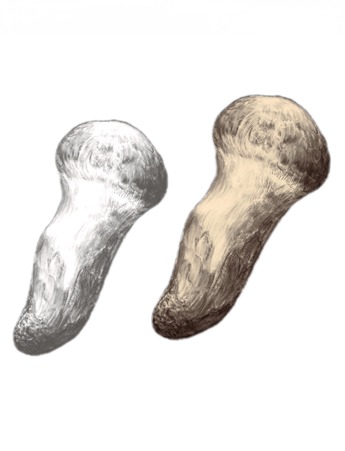
Matsutake are categorized based on two dimensions: maturity level and size. Maturity level is available in three grades. Tier 1: unopened the cap. The size of the body and cap are comparable. Tier 2: opening cap. The membrane has not been ruptured, and the body is not as dense as the cap. Tier 3: The membrane has ruptured. And according to the size, matutake is typically divided into five grades: 3-5cm, 5-7cm, 7-9cm, 9-12cm, and greater than 12cm. Although it is difficult to believe that larger is not always better, you must believe it when it comes to matsutake. Let’s simplify things by saying “the younger, the larger, the better”.
Matsutake from around the world
Matsutake mushrooms are important to Japanese culture and cuisine. Matsutake rice, mushroom soup, and tempura are made with them in fall. Japan has a Matsutake mushroom festival and is a major consumer.
Matsutake mushrooms, often known as “American Matsutake” or “Pine mushrooms,” grow in coniferous woods in the Pacific Northwest and Canada. Chefs and foragers harvest and value them. American Matsutakes are near relatives of Japanese ones.
Matsutake mushrooms are rare in Europe but may appear in coniferous and mixed woodlands. They are less popular in European cuisines than other mushrooms.
Yunnan and Sichuan provinces in China have matsutake mushrooms, known as “Song Rong” in Chinese. They go in soups and stir-fries.
Traditional Korean cuisine uses “Sanghu” matsutake mushrooms. They give soups, stews, and grains a distinctive flavor.
In Sweden and Finland, Matsutake mushrooms are called “Trattkantareller” and are delicacy. Usually sautéed and used in recipes.
Matsutake mushrooms are used in Southeast Asian cuisine, especially rice and soup dishes.
Matsutake mushrooms are available in our hemisphere from August to early October. Typically, it is an autum fungus
Sun drying was the traditional method of preserving Matsutake mushrooms. Depending on the temperature and humidity levels, it could take several days for them to entirely dry out. The flavor and scent of matsutake mushrooms may be effectively preserved using the process of freeze-drying, which also makes it possible to keep these mushrooms on the shelf throughout the entire year.
Matsutake mushrooms possess notable quantities of protein and fiber, rendering them an optimal dietary choice for fostering gastrointestinal well-being and facilitating the regeneration and development of bodily tissues. Additionally, these foods provide a rich content of various vitamins and minerals, with a notable emphasis on methionine, which is classified as an indispensable amino acid. Matsutake mushrooms possess a notable abundance of glutamic acid, a compound that plays a crucial role in supporting several physiological processes such as metabolism, the functioning of the neurological system, cognitive capabilities, and the overall health of the liver. Matsutake mushrooms possess a diverse array of essential vitamins and minerals, including potassium, zinc, copper, selenium, and B vitamins, which contribute to its comprehensive nutritional composition.
Matsutake mushrooms have a delightfully nuanced flavor profile. They have a robust umami profile and a meaty, delectable undertone. Both woodsy and vegetal flavors are present. This food is reminiscent of a forest floor, with a trace of fresh pine needles and a dash of spice. The aroma of Matsutake mushrooms is so pronounced that it can permeate the air in the vicinity when they are fresh. To completely appreciate the aroma and flavor of Matsutake mushrooms, they are frequently featured in dishes that highlight their distinctive qualities, such as matsutake sashimi, sukiyaki, dobin mushi (a clear soup), and Matsutake gohan (rice). It can also be prepared charcoal-grilled, butter-fried, and as salad components.
 English
  Chinese