

All About The Sarcodon Aspratus
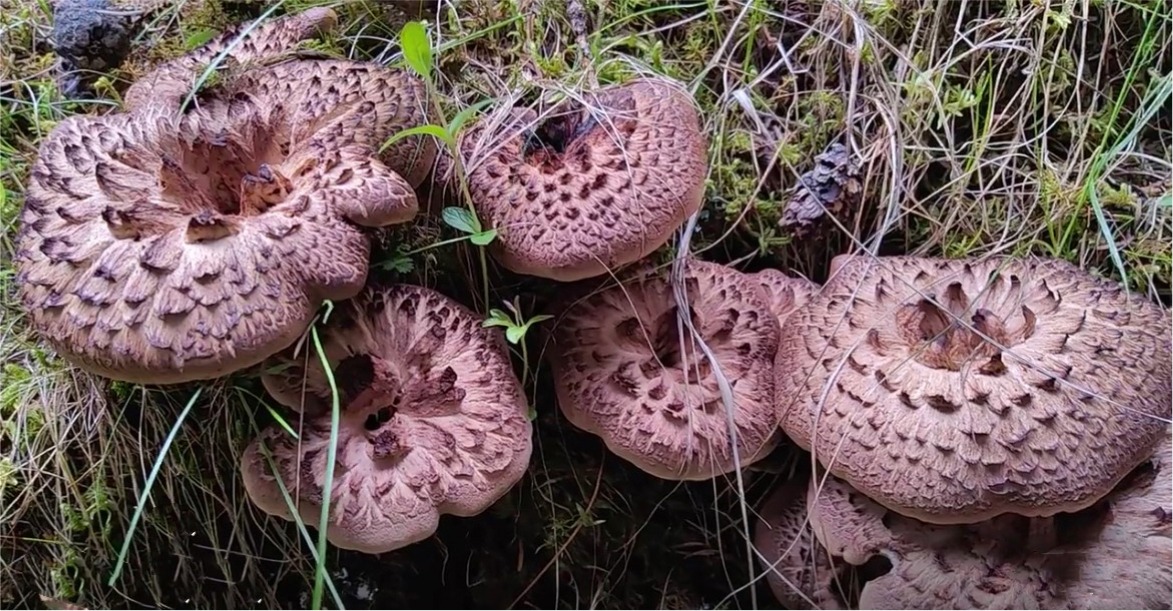
Sarcodon aspratus, also known as the “sarcodon” or “toothed hydnoid fungus,” is a mushroom belonging to the Bankeraceae genus and family Sarcodon. The common name of Sarcodon aspratus was derived from the animal’s brownish to grayish cap and tooth-like structures on the underside. These spines or teeth are hymenophore, structures that discharge spores.
Sarcodon aspratus has an obvious black pattern, shaped like tiger claws, and is also known as tiger palm fungus in Yunnan.
Several nutrients and bioactive compounds are present in Sarcodon aspratus. It is a potential source of nutrition due to its relatively high protein and carbohydrate content. Magnesium, manganese, iron, and zinc are also present. The prospective health benefits of Sarcodon aspratus have been utilized in traditional Chinese medicine and folk medicine. It is believed to reduce cholesterol, relieve muscles, and increase blood circulation. Research has identified compounds from the Sarcodon genus known as Scabronines. These compounds have increased nerve growth factor synthesis in vitro, indicating potential neurological benefits.
Tribute in Wild Fungis
Due to its rare grow, difficult collection, and high nutritional and medicinal value, the wild mushroom Sarcodon aspratus is lauded as a tribute species
History

The historical origins of Sarcodon aspratus are closely intertwined with both traditional Chinese medicine and culinary practices. Although the availability of specific historical data may be restricted, the utilization of this concept can be traced back over multiple centuries.
Traditional Chinese Medicine (TCM) has long utilized Sarcodon aspratus due to its perceived potential health advantages. There is a prevailing belief that this substance possesses therapeutic attributes associated with the management of cholesterol levels, muscular relaxation, and blood circulation. It is highly probable that these customary applications have origins dating back several centuries, during which the fungus was integrated into herbal treatments and tonics.
Apart from its therapeutic applications, Sarcodon aspratus is highly esteemed for its gastronomic purposes. The fungus in question is recognized as a consumable ingredient in Chinese gastronomy and finds application in several culinary preparations. The distinct morphology of this organism is characterized by the presence of tooth-like spines on the ventral surface of its cap, rendering it readily identifiable. Although it may exhibit bitterness, particularly in more mature specimens, it is commonly favored in its youthful state due to its comparatively subdued taste.
In recent times, there has been an increasing scholarly focus on investigating the nutritional and therapeutic attributes of Sarcodon aspratus. Numerous scientific investigations have been conducted to examine the chemical composition, potential bioactive constituents, and health-related advantages of the subject matter, thereby establishing a convergence between traditional wisdom and contemporary scientific inquiry.
Although the historical documentation of Sarcodon aspratus may not be as comprehensive as that of many other mushrooms, its persistent popularity and relevance in traditional Chinese culture, particularly in the realms of culinary and medicine are noteworthy.
How do people find Sarcodon Aspratus?
Sarcodon aspratus typically thrives in coniferous and broadleaf forests over 1,500 meters above the sea level, among trees such as Yunnan pine, Kefir, fir, and alpine oak. Chuxiong Yi Autonomous Prefecture and Naxi Autonomous County of Lijiang are the principal producing regions in Yunnan, along with Luhuo County, Daofu County, Jiulong County, and the neighboring areas in Garzi Prefecture of Sichuan Province on the western Sichuan Plateau. July through September is harvest season.
The mycorrhizal nature of Sarcodon aspratus mushrooms indicates that they have a symbiotic relationship with certain tree species. In coniferous or mixed forests, they frequently coexist with pine trees. Look for them in regions with abundant pine trees. Because the undersides of these mushrooms are serrated or spiked, they are known as “toothed fungi.” Typically, the spines are white or pallid and darken as the mushroom matures. The cap is brown and can attain a diameter of 9 to 12 centimeters.
The fruiting season for Sarcodon aspratus mushrooms is distinct. In many regions, they are present from late summer to early winter, with a typical climax in autumn.
Sarcodon Aspratus from around the world
Sarcodon aspratus is common in China, particularly in Yunnan Province and other coniferous forest regions. It is a renowned edible mushroom in traditional Chinese cuisine and medicine. In Russia, Sarcodon aspratus is known as “ПoAocNHoBNk” (Podsinovik) and is found in coniferous and mixed forests. This mushroom is regarded edible and is utilized in regional cuisines. In Poland, this species is known as the “Szczeciniak jodowy.” It is valued for its culinary applications. In North America, Sarcodon aspratus can be found in the northeastern United States and eastern Canada. It is not as well-known or frequently collected as other mushroom species, but it is infrequently gathered by mushroom collectors. Although less prevalent than other types of mushrooms, Sarcodon aspratus can be found in Japan. Although it is not a common culinary mushroom, it is ingested in some regions. It is important to observe that the recognition and availability of Sarcodon aspratus can vary considerably by region. In some regions, it is a well-known edible mushroom with cultural and culinary significance, whereas in others it may be less well-known or even ignored.
The harvest season of truffles depends on the type of truffle and the region where they are found. Winter truffles are typically harvested from November to March in the Northern Hemisphere. The peak season is often around December and January. They are commonly found in regions of France, Italy, and Spain. Black summer truffles have a harvest season from May to August in the similar regions as black winter truffles. White truffles are harvested from September to December. The peak season is often in October and November. The most famous white truffles come from the Piedmont region of Italy. In France and other European regions, truffles are typically harvested from September to December. In the United States, Oregon truffles are usually harvested from late autumn to early spring, with the peak season in December and January. Truffles in the Gaoligong Mountains region of Yunnan undergo ripening in the month of October, initiating a truffle harvesting season that spans from September through January of the next year.
Fresh Sarcodon aspratus mushrooms have a short storage life and must be eaten or preserved quickly. Proper storage techniques preserve flavor and texture for future culinary applications. HNG relies on modern food techniques such as dehydration, freeze-drying, and paste-making to maximize the mushroom’s flavor.
Sarcodon aspratus mushrooms are a valuable addition to vegetarian and vegan diets due to their moderate protein content. These mushrooms are an excellent source of dietary fiber, which aids digestion, promotes a sense of fullness, and contributes to the maintenance of healthy cholesterol levels.
Sarcodon aspratus mushrooms are naturally low in fat, they contain carbohydrates, Mg, Mn, Fe, and Zn. These fungi contain amino acids, the fundamental building elements of proteins.
Sarcodon aspratus contain bioactive compounds with possible health benefits. For instance, they have been utilized in traditional Chinese medicine due to their potential to reduce cholesterol levels, promote muscle relaxation, and enhance blood circulation.
As with many other mushrooms, Sarcodon aspratus mushrooms may contain antioxidants, which can protect cells from oxidative stress and reduce the risk of chronic diseases.
Some isolates of this genus may enhance nerve growth factor synthesis in vitro, which may have implications for nerve health.
Sarcodon aspratus is considered edible, and it is harvested for culinary purposes in some regions, particularly in China. However, it can have a bitter taste, especially in older specimens, so it is often preferred when young for a milder flavor.
When used in cooking, Sarcodon aspratus is often prepared by stir-frying, sautéing, or simmering in various dishes. It is used in traditional Chinese cuisine for its unique flavor and potential health properties.
 English
  Chinese