
All About The Morel

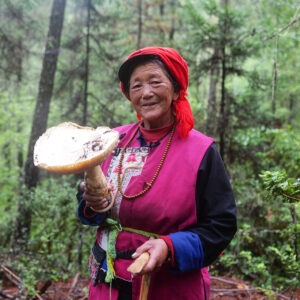
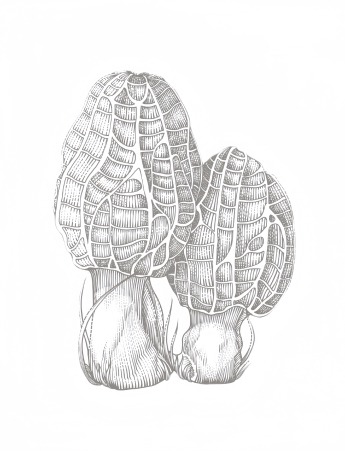
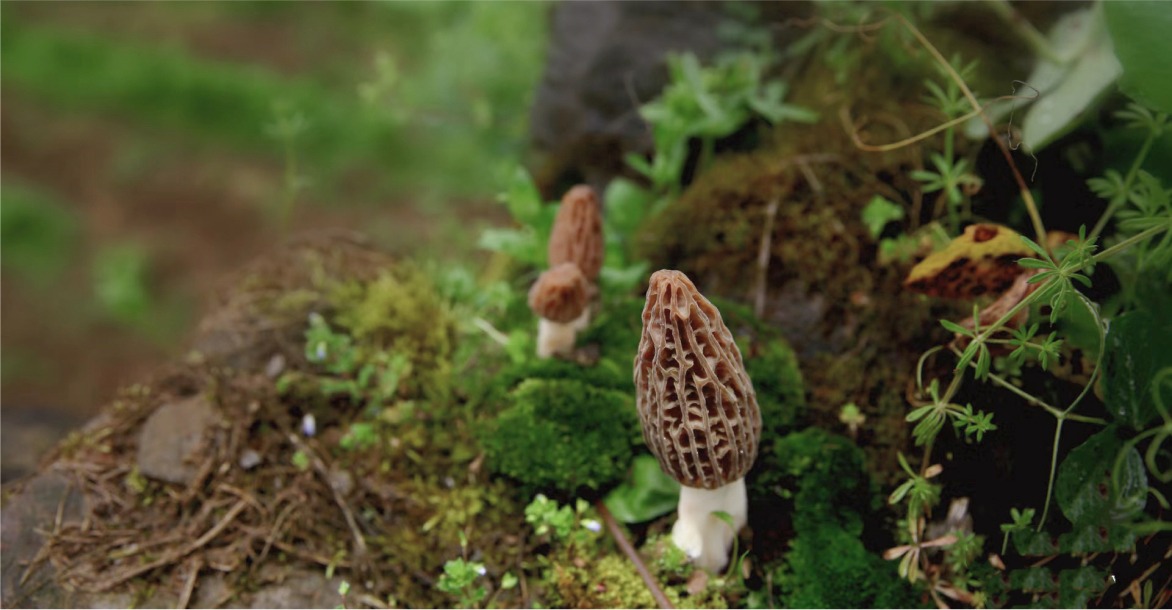
Morchella elata or Morchella esculenta, known as the morel mushroom, boasts a distinctive conical and slender shape and features a honeycomb network of sacs covering its brown surface. It emerges in forested areas or along field and stream embankments during the early spring. Despite its early appearance, spotting the morel can be challenging due to its seamless blending with the natural environment, often concealed among fallen leaves where it prefers to thrive. Many pass by this elusive fungus without ever noticing it, requiring a skilled eye to recognize. Despite its difficulty to find and seasonal rarity, the morel’s unique flavor makes it a sought-after delicacy for both amateur foragers and restaurateurs who incorporate it into inventive culinary creations, such as pairings with sweetbreads, asparagus, scallops, and more.
The Queen of The Undergrowth
Spring is prime time for finding morels in wooded areas and along trail edges. The sophisticated flavor of this mushroom is what earns it the highest praise
History
This rare mushroom has a light smell that makes it very desirable. Its price is second only to that of the black truffle. There are many different kinds of morels, and each has its own unique qualities. However, they all have important health and cooking benefits in common. Most of the morels we sell at HNG come from the wild.
Morels has been domesticated and cultivated by humans for more than one hundred years. American scientists Ower et al made the internationally recognized breakthrough in the domestication and cultivation of morels in the 1980s (Notes on the development of the morel ascocarp: Morchella esculenta[J]. Mycologia, 1982, 74(1): 142-144, Cultivation of Morchella: United States, EP86903077[P]. 1986-04-28, Cultivation of Morchella: United States,US07/217840[P]. 1988-07-12, Cultivation of Morchella: United States, US4866878[P]. 1989). Subsequently, American businesses implemented this technology for indoor cultivation and production, and there were reports of high yields; however, production was unstable for a long time, and the entire line was shut down around 2006. Masaphy conducted research on the indoor cultivation and developmental morphology of morchella in accordance with Ower’s technical program [External ultrastructure of fruit body initiation in Morchella[J]. Mycological Research, 2005, 109: 508-512, Biotechnology of morel mushrooms: successful fruiting body formation and development in a soilless system[J]. Biotechnology Letters, 2010, 32(10): 1523-1527] at the beginning of this century, but it was not commercially promoted. Gourmet Mushrooms revived the former US morels culture around 2015, but the issue of stability in morels cultivation remains unresolved. More recently, the Chinese have perfected the growing of morel mushrooms as well as the replication of its substrate.
Where does the morel grow?
The morel appears in the May and June under ash and birch trees, as well as generally under hardwoods and softwoods. It grows under pine but prefers colorful undergrowth.
Besides rocky environments like ancient ruins, this fungus thrives in sandy soils with a limestone subsoil.
The morel fungus has been shown to thrive in various environments, including both barren wastelands and cultivated gardens. Similar to the truffle, this particular fungus is classified within the taxonomic group of ascomycetes. Instead of possessing gills or spores, it exhibits sacs.
Cap and stem are both hollow. Even though its silhouette can differ, it is typically rounded and more or less spherical (Morchella rotunda or Morchella esculenta), or occasionally oval or conical (Morchella conica or elata). Similar to sponges, the sacs are irregular.
The stem of the morel is white, slightly feathery, and enlarged at its base. The color of its cap also differs, which depends on the variety and environment for growth. The growth period of morels is less than two weeks, therefore, collecting timing is crucial. The wild morel mushroom in Shangri_La can attain a height of 6-7 centimeters and a diameter of 3- 5 centimeters, and this morel is referred to as selected by HNG.
Morels from around the world
Most of the time, European morels are sold in fresh markets. It has a thick skin and a unique smell that combines smoky pine, earthy, and nutty scents. The European morels is neither graded nor stemmed.
The North American morel has a more neutral flavor and is more robust than its European counterpart. It grows frequently in wooded areas and favors land where slash-and-burn agriculture is practiced.
The Anatolian morel (Turkey) has a pepperier flavor than its European counterpart. Depending on how it is cured in India, the morel has a smoky aroma that varies in intensity. Meanwhile, autumn-grown morels have a firmer consistency.
The South American morel typically has a conical shape, thick epidermis, and a delicate fragrance.
The cultivated Chinese morel has a fine texture and is extremely regular as it gets picked when it reaches the desirable size. In recent years, there has been an increase in the availability of fresh, cultivated Chinese morels at our markets.
Wild morels from Shangri-La typically have a rich aroma, exuding a complex fragrance that combines notes of pine, earthiness, and nuts. The Shangri-La morel is mainly marketed on fresh markets. Nevertheless, we sell them dehydrated.
Morels are dried in the open air in various regions of the world. Morels can also be dried on a string. Pickers impale the stems of the morels and thread them onto a wire to help them dry, either in the open air or by a fire. Because of this, we sometimes find morels with roots that have been pierced.
The morel mushroom exemplifies the fundamental characteristic inherent in all nutritious edible fungi: it satiates hunger without contributing excessive caloric content to our dietary intake or exerting an impact on our sugar metabolic processes. Furthermore, apart from its nutritional advantages, this food item is notably abundant in specific trace elements such as iron, copper, zinc, and manganese, and serves as a significant source of B and D group vitamins. Therefore, the morel mushroom is appropriately recognized as an exceptional example of a “functional food”. Nevertheless, it is imperative to exercise caution while purchasing fresh morels, as these mushrooms necessitate thorough cooking to prevent potential toxicity. Similar to numerous ascomycetes, the morel fungus possesses compounds that have the capacity to induce hemolysis, leading to the destruction of erythrocytes. Fortunately, the toxicity of the dehydrated or canned morel is eliminated through the process of drying or sterilization.
In Asian cuisine, morels are highly prized for their unique flavor and aroma. Soups, stir-fries, fillings for dumplings, and sticky rice dishes are prepared with them. They are also used as ingredients in grilled, stewed, and hot pot dishes.
In Europe, however, morels are prepared with precision and finesse. Typically, an animal- or plant-based cream will accentuate the “umami” flavor of the morel and its smoky and savory aromas (curry, fenugreek, etc.). This mushroom pairs flawlessly with poultry or other white meats, such as veal. Typically, pasta or risotto are served with it. Due to its intense fragrances and flavors, the morel pairs well with spring vegetables (peas, asparagus, etc.) and dandelion baby greens. The flavor of white meats is enhanced. Combining the morel with an umami-rich vegetable, such as mature or dried tomato, asparagus, or broccoli, is ideal. It also combines well with sweet recipes (citrus compote coated in caramel) or on skewers: accompanied by salted caramel and an exotic fruit.
 English
  Chinese